HOW CINEMATIC PRODUCERS AND ARTISTS ARE MAKING TV-QUALITY MUSIC IN 90 DAYS FROM THEIR HOME STUDIO
We only take a handful of producers a month. Real mentorship — not another course.
2,000+
PRODUCERS TRAINED IN OUR SYSTEM
ON SPOTIFY
REAL STUDENT SONGS FINISHED & RELEASED
TV.FILM.RADIO
WHERE STUDENT SONGS HAVE LANDED
Real Records
NO LOOPS, NO SHORTCUTS, NO FAKE ARTISTRY
You're making cinematic music — but it doesn't stack up.
Your MIDI strings sound fake — and you can't figure out why the demos sound so much better than yours.
You've got the ideas — but your songs never build to a moment that hits like a trailer drop.
Your tracks feel epic in the DAW — but flat in the car, thin on headphones, and small on speakers.
You want your music on TV, in film, in licensing catalogs — but you know it's not there yet, and you can't hear what's holding it back.
You hear Tommee Profitt, 2WEI, Hans Zimmer — and you can feel what's missing in yours, but you don't know how to close the gap.
You're tired of generic, copy-paste beats — you want music that scores a scene, moves people, and actually gets heard.
It's not that you're not talented. Cinematic music is genuinely harder to produce — and no one's actually taught you how.
I spent 5 years trying to produce cinematic music on my own. In the end, all I had to show for it were hundreds of half-finished songs that were supposed to feel like a movie — and never quite did.
I wanted my songs to sound like Tommee Profitt, 2WEI, the stuff that plays under real scenes. But I couldn't afford thousands of dollars per song to hire real producers — and honestly, my own music wasn't even close to the quality I wanted.
So I stopped trying to figure it out alone. I called up a studio, took an internship, and became the guy doing the grunt work nobody else wanted — just to be in the room with people who knew.
Within months I went from very amateur music to nearly pro level. Years of guessing, fixed by being around people who actually knew.
Now? Years later, the work speaks for itself:
And the reason I could finally do it wasn't a plugin or a bigger sample library. It was this: I stopped guessing and got around people who could hear what I couldn't. That one shift is the difference between five years stuck and a few months breaking through.
Because here's the hard truth — cinematic music is one of the hardest genres to produce. The strings, the orchestration, the dynamics, the layering, the way it has to hit a moment — if your music isn't there yet, it's very likely you don't even know why. If you knew, it wouldn't sound the way it does. That's not an insult. It's the whole reason this works.
"I was stuck for four years. Within days of getting real eyes on my work, I finished a song, released it — and it's now past 200,000 streams."
This is the pattern we see again and again. It's almost never a talent problem. It's years of working in the dark with no one to tell you what's actually holding the music back. The moment that changes, things move fast.
There are really only two things that separate cinematic music that lands from cinematic music that doesn't.
Know what actually makes music sound cinematic.
The real moves behind records that score scenes — string layering across multiple libraries, orchestration, dynamics, hybrid production, the tension-and-release that makes a song feel like a movie. Not the surface-level tricks.
Actually do it on your own tracks.
With someone who can hear your music, tell you exactly what's making it sound like a preset or a demo, and walk you through fixing it — on the song you're working on right now.
So if it's that simple… why isn't everyone making TV-quality cinematic music?
Because cinematic music is one of the hardest genres to produce — and there's almost no one actually teaching it at a professional level. Random YouTube videos won't get you there. A course won't get you there. Someone in your ear on your own tracks will.
Built specifically for cinematic music.
This isn't generic production coaching pointed at a niche. It's a system built from the ground up for producers making music that's supposed to feel like a scene.
Strings that don't sound fake
The layering, articulation, and orchestration that separates real-sounding cinematic strings from MIDI that instantly gives away which library you're using.
You're never producing blind
Direct feedback from a working cinematic producer on your actual tracks — fixing sound choices, arrangement, orchestration, and mixing mistakes before they kill your song.
Cinematic arrangement frameworks
How to build songs that hit like a trailer drop — tension and release, dynamic sections, the moments that make people feel something instead of skip.
Hybrid orchestral + electronic
Blending real orchestration with modern production the way Tommee Profitt, 2WEI, and top trailer composers do — so your music sounds current, not stuck in film-school 2015.
Use what you already have
You've already got string libraries and big sounds — you just need to know how to actually use what you already own to make it sound top-tier.
Learn the business
Understand how the licensing and TV industry actually works for artists and producers. How to build relationships and stack the odds in your favor.
"10/10 RECOMMEND. NATHAN & ANDREW HELPED ME TREMENDOUSLY"

- ANDREW MARSHALL "THE VOICE" COMPETITOR
Why this actually works
We've stripped producing down to what really matters — proven strategies that build your confidence, raise your quality, and cut years of trial and error.
Built on real results
Every strategy inside DVLP has been battle-tested in real releases across 2,000+ producers — not theory, not fluff.
You're never producing blind
You get direct feedback from pros who've been where you are — fixing poor sound choices, arrangement issues, performance problems, and mixing mistakes before they kill your momentum.
Proven song frameworks
Our development frameworks are refined across genres to help you finish music that connects emotionally and sounds professional.
Timeless over trendy
We focus on real musicianship, artist identity, and release strategy that keeps working long after the trend dies.
Clarity on every song
A clear framework for arrangement and vocals so you always know your next move — instead of staring at a session not knowing what's wrong.
You get expert ears
Reference-based mix analysis shows you exactly what's holding your song back from sounding competitive — so you fix it before release day.
"My wife could tell the difference."
"Now I get DMs asking - who's your producer??"
"I landed a song in a movie."
What you get inside DVLP
Direct Access
All-access to me and my team. Send your tracks, ask any question, get real answers from a producer with actual Netflix and TV placements — not a coach who's never had a song placed.
Coaching Calls
Small-group calls where we go deep on your cinematic tracks — arrangement, string writing, hybrid production, the specific problems your songs are actually facing.
"DVLP Your Sound" Sessions
Group deep-dives into your actual song stems to pinpoint exactly what's holding your cinematic music back — so you're never confused about your next move.
Private Community
Surround yourself with other serious cinematic producers and self-producing artists. Real encouragement, real accountability, real momentum — the room you've been missing.
Our Cinematic Mix System
The exact mixing approach for cinematic music — how to make orchestral, hybrid, and pop-cinematic productions translate to TV, film, and streaming without falling apart on real speakers.
Full Training Catalog
Our full catalog of production content — from the basics to advanced mixing techniques, plus every past training session going years back.
The Music Business, Demystified
Understand how the music industry actually works — licensing, sync, publishers, catalogs, and how to build the relationships that turn great music into real placements. So when your music is ready, you know exactly where to put it and who to talk to.
Is this for you?
DVLP is a real mentorship for cinematic producers with limited spots. The fastest way to know if it's a fit is an honest look at both columns.
✦ This is for you if…
- →You're a self-producing artist making cinematic or cinematic-adjacent music.
- →You're a composer or producer chasing placements — TV, film, trailers, sync.
- →You want the hybrid path — artistry plus placements, the Tommee Profitt trajectory.
- →You already have the ideas — you just need someone who can hear what you can't.
- →You're ready to work. You want honest feedback, not empty encouragement.
✕ This is not for you if…
- ×You want to make beats or any non-cinematic genre — this is not the mentorship for you.
- ×You're looking for shortcuts, AI hacks, or instant placements.
- ×You think a bigger sample library will fix your music.
- ×You're not willing to actually practice and apply the feedback.
- ×You want another passive course to sit unwatched.
What Our Students Say
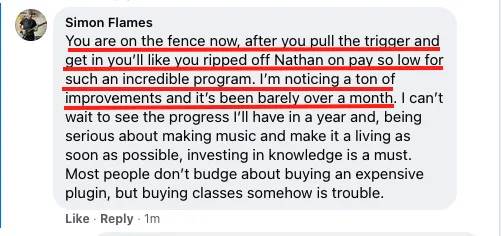

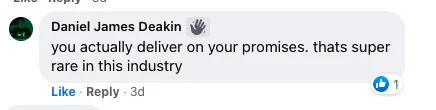


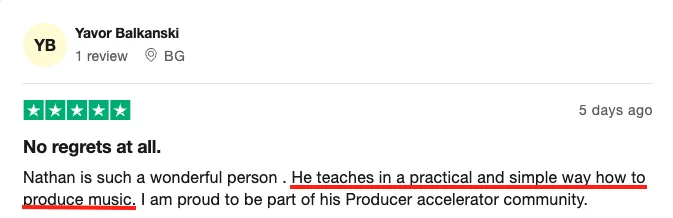


"No one out there is doing what you guys are doing"
Common questions
What am I actually going to learn? +
Will I actually learn how to get songs placed? +
What skill level do I need to be at? +
What if I make music in other genres but want it to feel cinematic? +
Do I need tons of sound libraries already? +
How is this different from a course or YouTube tutorials? +
How much time do I need to commit each week? +
Your music is supposed to feel like a scene.
Imagine your song in a scene on a big Netflix show or under a top brand's commercial. Landing in a publisher's catalog. Getting picked up. Playing under the climax scene. That's not luck — it's knowing what to fix and having someone in your corner who's already done it. If you're a serious cinematic producer or artist, apply now and let's see if you're a fit. We'll be honest with you either way.
Takes a few minutes · No pressure · We review every application personally
You already have the ideas. Let's get them out.
Imagine sending someone your next song and watching their face change. That's not luck, and it's not talent you don't have — it's knowing what to fix, and having someone in your corner who can hear it with you. If you're serious, apply now.